Blooms, Bugs, and Buckets: The Secret Battle on My Patio
I love okra, but I am quickly learning that growing it on a small patio comes with a whole lot of uninvited drama, like discovering black aphids on okra overnight.
If you’ve been following my patio garden journey, you know I had grand visions of eating fresh okra this summer. Instead, this journey has been a masterclass in patience, creativity, and budget management.
It started with three small “Green Fingers” okra plants crammed into one shallow window planter. The plan was to move them once gardening funds allowed, but a month slipped by, and it was nearly too late. With limited patio space, I scrambled and repotted them into a massive clear plastic tote. They stayed stunted, and the few pods they gave me were always rock-hard.
Determined to get my summer fix, I went out and bought two more plants—this time, a tall heirloom variety called “Clemson Spineless.” I put one in a 5-gallon bucket and the other in a 10-gallon fabric bag. These took off, growing tall and giving me a beautiful, steady harvest every week.
Everything looked fine on the surface. Both varieties had beautiful blooms. But today, I took a close look at the short Green Fingers plants and was absolutely blown away.
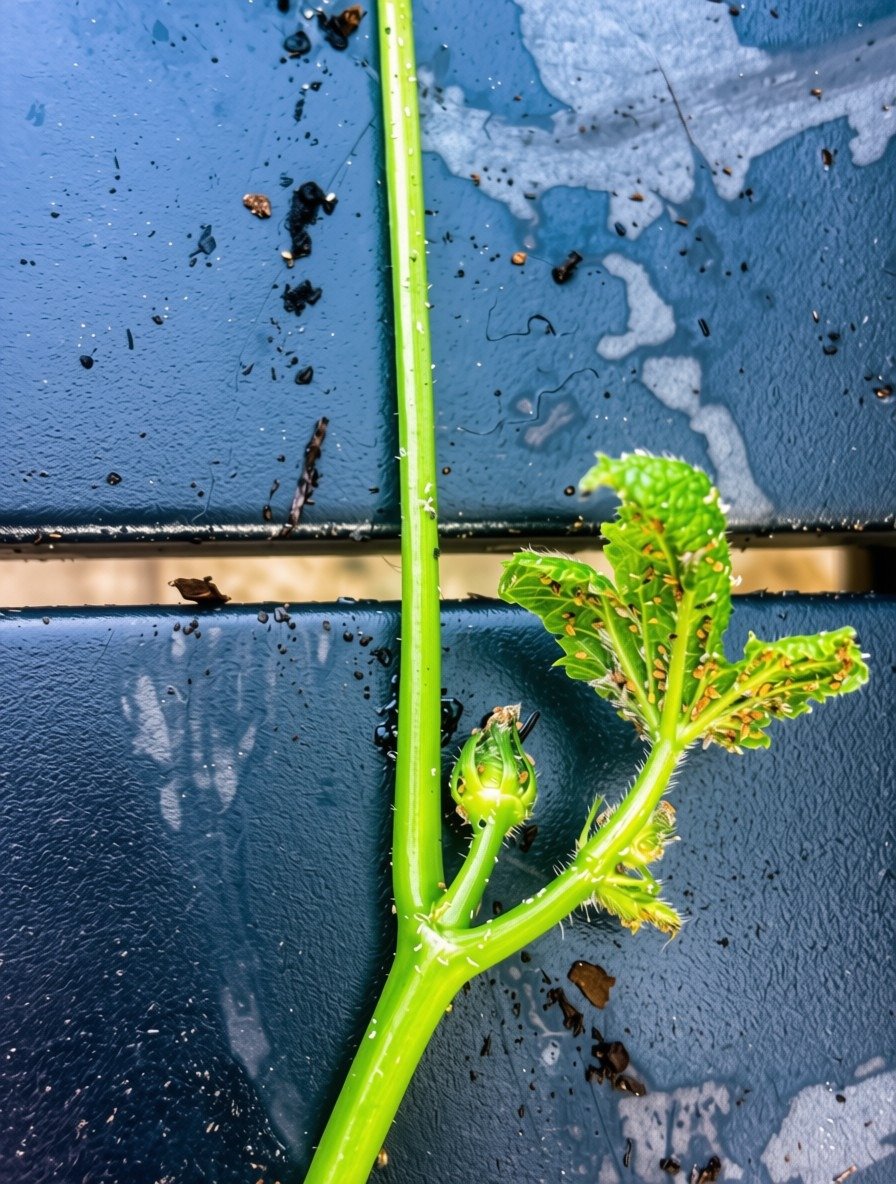
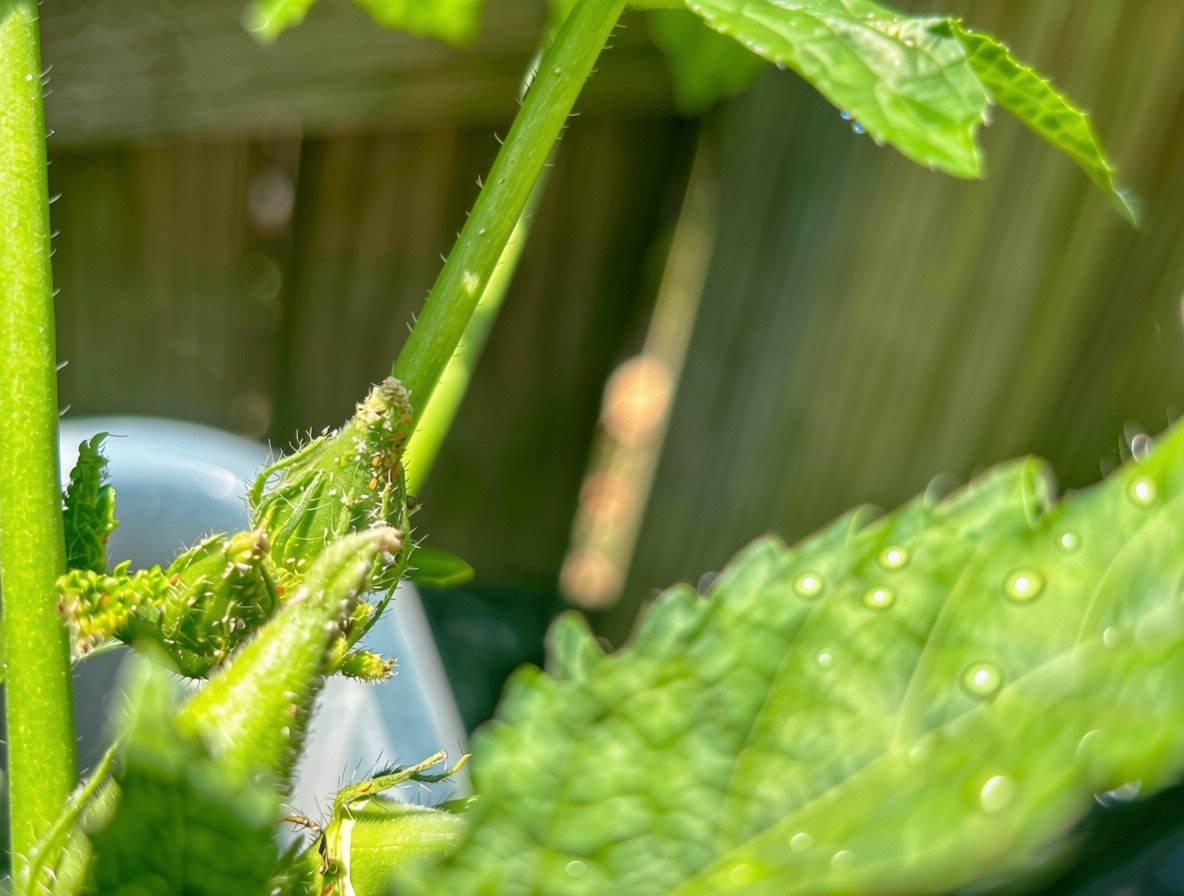
The undersides of the leaves were completely covered in tiny, stationary pests. After consulting “Dr. Google” and a Facebook gardening group, I realized I was looking at an active black aphids on okra infestation! Yes, the photos in this blog post are the real original photos! My immediate reaction was to throw the whole container in the trash!!!
But my husband stopped me. He grabbed the garden hose and suggested we just blast them off. It took a lot of patience, but we went leaf by leaf, front and back, spraying those tiny destroyers into oblivion. I even pruned back some of the extra leaves afterward just so the plant could finally breathe. (Actual video on TikTok and Facebook page)
Then, I went to check my beautiful, tall Clemson Spineless plants sitting on the complete opposite side of the patio. On top, they looked picture-perfect. But when I flipped the leaves over… there they were. It wasn\’t as bad yet, but the same silent destroyers were starting to take hold.
The Spiritual Lesson: Black Aphids on Okra and Hidden Attacks
As I stood there with the hose, it hit me how much these okra plants mirror our everyday lives and relationships. On the outside, everything can look perfectly fine. We bloom, we produce, and we smile. But underneath the surface, there can be a hidden infestation.
-
The short okra represents those moments where the attack is heavy and obvious. Those pests clinging to the leaves are like the people who harbor jealousy, bitterness, or hidden negativity toward you. They cling to your life, draining your energy, and if they aren’t dealt with, they will eventually destroy your fruitfulness and your peace.
-
The tall okra represents a different kind of danger: the slow, sneaky destroyer. It’s thriving, it’s distant from the obvious mess, yet the seeds of negativity are quietly trying to settle in anyway. It’s a reminder that no matter how high we grow or how well we think we are doing, we have to stay vigilant.
We have to look beneath the surface of our inner circles. If someone is quietly rooting for your downfall while clinging to your branches, it’s time to grab the hose. Flip the leaves, inspect the spirit of what is attached to you, and blast away the things trying to ruin your harvest.
“Smooth words may hide a wicked heart, just as a pretty glaze covers a clay pot.” — Proverbs 26:23
Now, the leaves are clean, the hose is on standby, and we will keep on blasting as needed. Keeping a watchful eye.
No matter what is quietly trying to attach itself to your underside, like black aphids on okra, remember this: You have the power to shake off, wash clean, and outgrow the silent destroyers meant to hold you back.